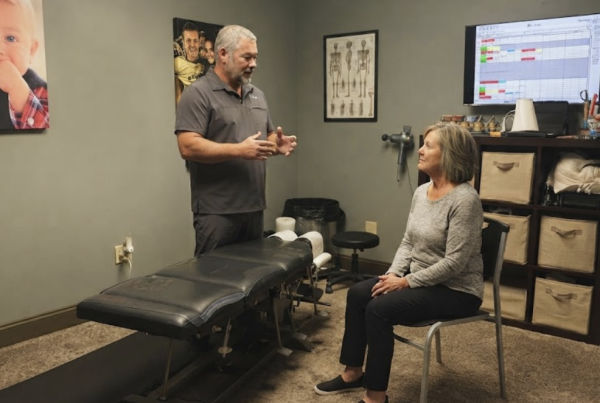
That burning, shooting pain down your leg doesn’t just hurt. It changes how you sleep, how you sit, and whether you can make it through a workday without shifting in your chair every ten minutes. According to the BMJ, about 20-30% of people with acute sciatica still have persistent problems after 1 or 2 years (BMJ, 2007). That’s not a small number. That’s a lot of people who tried something, and it didn’t stick.
Direct Answer
Sciatica treatment that works in 2026 addresses the nerve compression at its source, not just the pain signal. Chiropractic care, spinal decompression, and targeted soft tissue therapy have strong track records for the most common cause: herniated disc with nerve root compression. Rest, stretching alone, and long-term pain medication management typically don’t resolve the underlying compression and often extend recovery.
Key Takeaways
- About 90% of sciatica cases are caused by a herniated disc pressing on a nerve root, which means the treatment has to address that disc, not just the leg pain (BMJ, 2007)
- Pain medication reduces symptoms temporarily, but doesn’t change the mechanical problem creating the nerve compression
- Spinal decompression therapy works by creating negative pressure in the disc space, which allows the herniated material to retract off the nerve
- Waiting and “seeing how it goes” is the most expensive decision most sciatica patients make, because nerve compression that persists can cause lasting changes to nerve function
- Getting a proper structural assessment first determines whether you’re dealing with a disc issue, piriformis involvement, or lumbar stenosis, and that distinction drives everything else
Why Does Sciatica Feel Different From Regular Back Pain?
Sciatica isn’t a diagnosis. It’s a symptom.
Sciatica is the term for pain, numbness, or weakness that follows the path of the sciatic nerve, typically from the lower back through the buttocks and down one leg. The nerve itself isn’t the problem. Something is pressing on it.
In about 90% of cases, that something is a herniated disc with nerve root compression (BMJ, 2007). The disc bulges, contacts the nerve root exiting the spine, and the result is that unmistakable radiating pain that can stretch from your lower back all the way to your foot.
The reason sciatica feels different from regular back pain is that it is different. You’re not dealing with muscle soreness or joint stiffness alone. You’re dealing with a nerve under mechanical load, and that nerve will keep signaling distress until the load is removed.
This is also why generic back pain advice often fails sciatica patients. Stretching, heat, and rest can reduce muscle tension, but they don’t decompress a disc. They don’t move herniated material away from a nerve root. They address the neighborhood, not the problem.
What Has Stopped Working (And Why It Was Never the Right Approach)
Here’s the contrarian claim worth sitting with: rest is not treatment for sciatica. It’s a pause.
For decades, the default advice for back and leg pain was to rest, take anti-inflammatories, and wait. For some acute injuries, that’s reasonable. For sciatica caused by disc herniation, prolonged rest can actually allow the surrounding muscles to weaken and the disc to remain compressed longer, because movement and gentle mechanical loading are key to disc rehydration and repositioning.
Pain medication has a role in making daily function bearable during recovery. It does not have a role in fixing the structural problem. This is the distinction most people miss: symptom management and cause resolution are not the same thing, and treating them as interchangeable is why so many people are still in pain a year after their first flare-up.
Consider a typical case: someone wakes up with shooting leg pain, takes ibuprofen for two weeks, feels slightly better, returns to normal activity, and then re-aggravates the same disc three months later. The pain wasn’t resolved. It was quiet. The disc never moved.
The other approach that’s losing traction is the one-size protocol. Sciatica from a herniated disc at L4-L5 responds differently than sciatica caused by piriformis syndrome or lumbar stenosis. Applying the same treatment to all three is guessing, not treating.
What’s Actually Working for Sciatica in 2026
The treatments producing real, lasting relief share one thing: they address the mechanical cause, not just the pain signal.
Spinal decompression therapy is one of the most direct tools available for disc-related sciatica. Spinal decompression is a non-surgical, traction-based treatment that creates negative intradiscal pressure, which allows herniated or bulging disc material to retract away from the nerve root. You can read more about how spinal decompression works at McCracken Chiropractic if you want the specific mechanics of what happens during a session.
Chiropractic adjustments address the spinal joint dysfunction that often accompanies disc problems. When vertebrae are misaligned, the surrounding musculature compensates, which can increase pressure on already-stressed discs and keep the nerve compressed. Restoring proper alignment reduces that secondary load.
SoftWave therapy is another tool worth knowing about. SoftWave is an acoustic wave treatment that promotes tissue repair and reduces inflammation at the cellular level, which is relevant when the nerve root itself has become inflamed from sustained compression. McCracken Chiropractic offers SoftWave therapy as part of personalized treatment programs for patients with nerve-related pain.
Laser therapy works through a similar mechanism on the tissue side. Laser therapy treatment accelerates cellular repair in damaged soft tissue, reduces inflammation around the nerve pathway, and can shorten the recovery window when combined with structural correction.
The keyword in all of this is combined. No single modality does everything. The patients who recover fully are usually the ones whose care addressed the disc, joint alignment, nerve inflammation, and supporting muscle function together, not in isolation.
If you’re at the point where you want to stop managing pain and start resolving it, requesting an appointment at McCracken Chiropractic is the right next step. Dr. McCracken builds individualized treatment programs based on what’s actually driving your specific presentation, not a generic sciatica protocol.
The Sciatica Recovery Framework: Matching Treatment to Cause
Before any treatment decision makes sense, you need to know which type of sciatica you’re dealing with. This is the step most people skip because they’re focused on stopping the pain fast.
The Source-First Framework works like this: identify the primary compression source, select treatment modalities that directly address it, and support recovery with secondary modalities that reduce inflammation and restore function.
Use it when: you’ve had leg pain for more than two weeks, the pain follows a nerve path (not just a muscle), or you’ve had a previous episode that resolved and returned.
Don’t apply it when: the pain is clearly muscular in origin with no radiating component. That’s a different problem requiring a different approach.
| Approach | What It Addresses | What It Doesn’t Address | Best For |
| Rest only | Muscle fatigue, acute inflammation | Disc position, nerve compression | Short-term acute flares only |
| Pain medication | Symptom intensity | Structural cause | Temporary function support |
| Chiropractic adjustment | Joint alignment, secondary muscle tension | Severe disc herniation alone | Alignment-related compression |
| Spinal decompression | Disc herniation, nerve root pressure | Piriformis-only cases | Disc-related sciatica |
| Combined care (adjustment + decompression + laser/SoftWave) | Cause, inflammation, tissue repair | Surgical-level structural damage | Most non-surgical cases |
The thing about sciatica that most people don’t hear until they’ve already spent months on the wrong path: the treatment that makes you feel better in the short term, and the treatment that resolves the problem, are often not the same thing.
Who Sciatica Treatment Is and Isn’t Right For
The conditions treated at McCracken Chiropractic cover a wide range of musculoskeletal and nerve-related presentations. Non-surgical sciatica care is appropriate for most people with disc-related nerve compression, including those who’ve had the condition for months without resolution.
Where this approach fits best: disc herniation confirmed or suspected, pain that worsens with sitting or forward bending, leg symptoms that are stronger than back symptoms, and people who want to avoid surgery or reduce reliance on medication.
Where surgical evaluation becomes necessary: cauda equina syndrome (loss of bladder or bowel control), severe progressive muscle weakness in the leg, or structural damage that’s beyond what conservative care can address. These are serious red flags that require immediate medical attention, and any honest provider will tell you that upfront.
McCracken Chiropractic will tell you directly if your situation calls for a different level of care. That kind of straight talk is part of how they operate.
What About Auto Accident Injuries and Sciatica?
This is a follow-up question worth answering directly, because it comes up often.
Auto accidents frequently cause or worsen disc herniations, especially in rear-impact collisions where the lumbar spine absorbs sudden force. If your sciatica started after a car accident, the mechanism is often the same (a disc pressing on a nerve root), but the surrounding tissue damage is usually more extensive, and the timeline of inflammation is longer.
McCracken Chiropractic has specific experience in treating auto accident injuries, including the documentation process that matters when you’re dealing with an insurance claim. Getting proper care documented from the beginning protects both your health and your case.
Frequently Asked Questions
How long does it actually take for sciatica to go away with chiropractic care?
Recovery timelines vary depending on how long the nerve has been compressed and how severe the disc involvement is. Mild cases with early intervention can see meaningful improvement within a few weeks of consistent care. Cases that have been present for months without treatment typically take longer because the surrounding tissue has adapted to the compression. There’s no honest universal timeline, but most people notice a meaningful shift in symptoms before their care plan is complete.
Is it safe to get adjusted when I have sciatica?
Yes, for the vast majority of people with disc-related sciatica. Chiropractic adjustments for sciatica are applied specifically to the lumbar and sacral regions to reduce joint dysfunction and relieve secondary pressure on the nerve. The adjustment isn’t being performed on the herniated disc itself. The rare exceptions are cases involving severe neurological deficits, which a proper intake exam would identify before any treatment begins.
Can sciatica come back after treatment?
It can, especially if the lifestyle factors that contributed to the original disc herniation (prolonged sitting, poor posture, weak core support) aren’t addressed. This is why a good treatment program doesn’t just treat the acute episode. It includes corrective exercises and postural guidance designed to reduce the likelihood of re-injury.
What’s the difference between sciatica and regular lower back pain?
Regular lower back pain is typically localized to the lumbar region and is usually muscular or joint-related. Sciatica involves the sciatic nerve and produces symptoms that travel down the leg, often including burning, tingling, numbness, or weakness below the knee. The two can coexist, but they require different treatment approaches, which is why a proper assessment matters before starting care.
Do I need an MRI before starting sciatica treatment?
Not always. A skilled clinician can identify the likely cause of sciatica through orthopedic testing, neurological assessment, and a thorough health history. An MRI provides confirmation and rules out serious causes like tumors or severe stenosis, but it’s not a prerequisite for beginning conservative care in most straightforward presentations. Dr. McCracken will let you know during your initial assessment whether imaging is warranted.
I’ve had sciatica for over a year. Is it too late for non-surgical treatment to help?
Chronic sciatica is harder to treat than acute sciatica, but it’s not a closed door. The BMJ notes that about 20-30% of patients with acute sciatica still have persisting problems after one or two years (BMJ, 2007), which means a significant portion of people with long-standing sciatica never received care that addressed the root cause. Spinal decompression and combined chiropractic care can still produce meaningful results in chronic cases, particularly when the disc involvement is the primary driver.
What should I bring to my first appointment for sciatica?
Bring any imaging you already have (X-rays, MRI reports), a description of when and how the pain started, and a clear sense of which activities make it better or worse. You can complete your new patient’s health history before your appointment to make the intake process faster. The more specific you can be about your symptom pattern, the more targeted the initial assessment will be.
The Decision That Keeps Costing People
The annual prevalence of disc-related sciatica in the general population is estimated at 2.2% (BMJ, 2007). That’s a lot of people quietly managing a condition that, in most cases, responds well to the right non-surgical care.
The people who stay in pain longest aren’t the ones with the worst cases. They’re the ones who kept waiting for it to resolve on its own, tried one thing that didn’t work, and assumed that meant nothing would.
Waiting feels like caution. It’s actually the most expensive move you can make with a nerve compression problem.
If you’re in the Calhoun, GA area and you’re done managing symptoms and ready to address what’s actually causing your pain, McCracken Chiropractic is the place to start. Dr. McCracken builds personalized treatment programs based on your specific presentation, not a generic protocol. The available services and techniques cover the full range of what non-surgical sciatica care looks like when done right.
Schedule your appointment today and get a clear picture of what’s driving your pain and what it will actually take to resolve it.
About the Author
McCracken Chiropractic is a non-surgical, drug-free chiropractic practice located in Calhoun, GA, specializing in spinal care, nerve-related pain, and whole-person healing. Led by Dr. Chris McCracken, the practice serves individuals and families dealing with sciatica, chronic back and neck pain, auto accident injuries, and a range of musculoskeletal conditions through personalized treatment programs that address the root cause, not just the symptoms.
References
BMJ (British Medical Journal) – Sciatica: prevalence, causes, prognosis, and treatment overview