
Living with pain that doesn’t go away is exhausting in a way that’s hard to explain to someone who hasn’t felt it. You’ve tried resting, maybe tried medication, maybe told yourself it’ll pass – and it hasn’t.
Chiropractic care is a non-surgical, drug-free approach to treating pain and injury by addressing the structural and neurological causes rather than masking symptoms. For people dealing with back pain, neck pain, headaches, or recovery from an accident, it’s often the most direct path to real, lasting relief without the risks that come with surgery or long-term medication use.
Key Takeaways
- Chiropractic care works by correcting the root cause of pain, not just quieting the symptom temporarily.
- Auto accident injuries often have delayed symptoms – waiting to get evaluated is one of the most common and costly mistakes.
- Not every chiropractor offers the same treatment options. Spinal adjustments, laser therapy, SoftWave therapy, and corrective exercises serve different conditions and stages of recovery.
- Personalized treatment programs outperform generic protocols because two people with “back pain” can have entirely different underlying causes.
- The biggest risk in chiropractic care isn’t the treatment itself. It’s waiting so long that a manageable problem becomes a structural one.
What Does Chiropractic Care Actually Do – and How Does It Work?
Most people think of chiropractic care as “getting your back cracked.” That’s like describing surgery as “getting cut open.” Technically not wrong, but it misses everything that matters.
Chiropractic care is built on the principle that the spine and nervous system are central to the body’s ability to function and heal. When spinal alignment is off, it doesn’t just cause local pain. It creates pressure on nerves that affects how the rest of your body communicates with itself. A misaligned vertebrae in your neck can produce headaches, shoulder tension, even arm numbness – none of which feel like a “spine problem” until someone looks at the whole picture.
The mechanism isn’t mysterious: a spinal adjustment restores proper joint motion, reduces nerve interference, and allows the body’s natural healing process to do its job without obstruction.
This is why the whole-person approach at McCracken Chiropractic focuses on underlying health challenges rather than just the loudest symptom. Treating only what hurts most right now is how people end up back in the same chair six months later.
Why Do So Many People Wait Too Long Before Seeing a Chiropractor?
Here’s the contrarian claim worth sitting with: waiting to see if pain “resolves on its own” is not cautious. It’s expensive.
When a joint is misaligned or a disc is under abnormal pressure, the surrounding muscles compensate. They tighten. They pull on other structures. Over weeks and months, what started as a correctable alignment issue becomes a layered pattern of muscular compensation, reduced range of motion, and sometimes permanent structural change. The body is adaptive, but not always in ways that help you.
A typical scenario: someone is in a rear-end collision and feels fine for 48 hours. No visible injury, no immediate pain. They skip the doctor visit. Two weeks later, neck stiffness sets in. By month two, they have chronic headaches and shoulder pain they can’t explain. What was a straightforward soft-tissue injury at the time of impact has now become a chronic condition – because the window for early intervention closed.
The auto accident injury treatment approach at McCracken Chiropractic is built specifically around this reality. Early evaluation after an accident isn’t just smart. It’s often the difference between a short recovery and a long one.
What Conditions Does Chiropractic Care Actually Treat?
Chiropractic care is commonly associated with back pain, but the range of conditions it addresses is wider than most people realize. The conditions treated at McCracken Chiropractic include back pain, neck pain, headaches, sciatica, sports injuries, and more.
The common thread across all of them is structural origin. If a condition has a root cause in how your spine, joints, or soft tissues are functioning, chiropractic care has a direct path to it.
What it doesn’t treat: conditions that are purely systemic (like infections or autoimmune disorders) or structural damage that requires surgical repair. A good chiropractor will tell you when you’re in the wrong office. That honesty is part of what makes the relationship trustworthy.
How Is a Personalized Treatment Program Different From a Generic One?
This is where the real difference lives.
A generic chiropractic protocol treats “back pain” as a category. A personalized treatment program treats the specific person in front of the provider, with their specific history, their specific movement patterns, their specific goals.
Consider two people who walk in with lower back pain. One is a 45-year-old who sits at a desk for 10 hours a day and has gradual disc compression. The other is a 28-year-old who was in a car accident three weeks ago and has acute soft-tissue injury. Same complaint. Completely different underlying causes. The same treatment plan would fail at least one of them.
Dr. Chris McCracken’s approach at McCracken Chiropractic is built around this distinction. The intake process, the health history review, and the treatment design are all oriented toward your specific situation, not a template.
If you’re ready to stop guessing what’s causing your pain and get an actual answer, request an appointment and start with a real evaluation.
What’s the Difference Between Laser Therapy, SoftWave Therapy, and Spinal Adjustments?
Not all chiropractic offices offer the same tools. Understanding what each modality does helps you know what to ask about.
| Treatment | What It Addresses | How It Works | Best For |
| Spinal Adjustment | Joint misalignment, nerve interference | Manual or instrument-assisted correction of vertebral position | Back pain, neck pain, headaches, posture issues |
| Laser Therapy | Tissue inflammation, cellular repair | Photobiomodulation stimulates cellular energy production | Soft tissue injuries, chronic pain, post-surgical recovery |
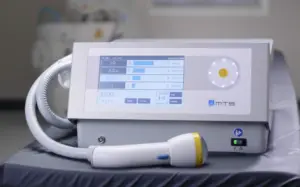
| SoftWave Therapy | Deep tissue regeneration, chronic conditions | Acoustic waves trigger the body’s natural healing response | Tendon issues, plantar fasciitis, stubborn chronic pain |
| Spinal Decompression | Disc pressure, nerve compression | Mechanical traction reduces intradiscal pressure | Herniated discs, sciatica, degenerative disc disease |
The point isn’t to pick one. It’s that a practice offering multiple modalities can match the treatment to the problem rather than forcing every problem to fit the one tool available.
Pain that hasn’t responded to a single treatment approach often responds when the right combination is applied. That’s not a sales pitch. It’s how tissue healing actually works.
What Should You Realistically Expect From Treatment?
Chiropractic care produces real results. It also takes time, and any provider who promises otherwise is telling you what you want to hear.
For acute injuries (recent accidents, sudden-onset pain), many patients notice meaningful improvement within the first several visits. For chronic conditions that have been building for months or years, the timeline is longer because the underlying patterns took time to develop and take time to correct.
The honest version of this: you’re not going to undo six months of compensation patterns in two sessions. What you can expect is a clear treatment plan with defined goals, regular reassessment, and a provider who adjusts the approach if something isn’t working.
The services and techniques at McCracken Chiropractic are designed to work together across a treatment arc, not as isolated one-off visits. That’s what “whole-person care” means in practice.
Who Is This NOT For?
Chiropractic care isn’t the right fit for every situation, and it’s worth being direct about that.
If you have a fracture, active infection, certain types of cancer affecting the spine, or severe osteoporosis, spinal manipulation may not be appropriate and a different care path is needed first. If you’re in a medical emergency, the emergency room comes before any other appointment.
Chiropractic care also isn’t a substitute for mental health support, nutritional intervention, or conditions that require pharmaceutical management. A whole-person approach means knowing what falls outside the scope of what your chiropractor can do.
What it IS for: musculoskeletal pain, nerve-related symptoms, recovery from physical injury, and preventative care for people who want to stay functional and pain-free over the long term. If that’s your situation, waiting doesn’t protect you. It just costs you time.
Frequently Asked Questions
How do I know if my pain is serious enough to see a chiropractor?
If your pain has lasted more than a few days, is affecting your sleep or daily activity, or followed an injury like a car accident or fall, it’s worth getting evaluated. Chiropractic care isn’t just for severe cases. Catching a problem early is almost always easier and faster to resolve than treating it after it’s had time to compound.
Will a chiropractor just keep me coming back forever?
A good chiropractor builds a treatment plan with a beginning, middle, and end. At McCracken Chiropractic, the goal is to get you to a point where you don’t need frequent visits. Some patients choose ongoing preventative care after their initial issue is resolved, but that’s a choice, not a requirement built into the model.
Is chiropractic care safe after a car accident?
Yes, and it’s often one of the most appropriate first steps. Soft-tissue injuries from accidents respond well to early chiropractic intervention. Waiting for symptoms to appear before seeking care is a common mistake that turns short recoveries into long ones. If you’ve been in an accident, the new patient personal injury form at McCracken Chiropractic makes it easy to get started quickly.
What if I’ve had back surgery – can I still see a chiropractor?
Post-surgical patients can often benefit from chiropractic care, but it requires a different approach than standard spinal manipulation. Dr. McCracken reviews your full health history before any treatment begins, which is exactly the right way to handle this. The answer depends on your specific surgery, how long ago it was, and what your current symptoms are.
How is chiropractic care different from physical therapy?
Physical therapy focuses primarily on rehabilitation through exercise and movement retraining. Chiropractic care addresses the structural and neurological components first, then supports recovery through corrective exercises and other modalities. The two aren’t mutually exclusive, but chiropractic care goes directly to the source of nerve interference and joint dysfunction in a way that exercise alone can’t.
Does insurance cover chiropractic care?
Many insurance plans do cover chiropractic visits, and auto insurance typically covers accident-related chiropractic treatment. McCracken Chiropractic’s payment options page outlines what’s available. If you’re unsure about your coverage, the office can help you sort it out before your first visit.
What makes McCracken Chiropractic different from other options in the area?
The combination of personalized treatment programs, multiple advanced modalities (including laser therapy and SoftWave therapy), and Dr. McCracken’s whole-person philosophy sets the practice apart. Patients consistently note quick appointment availability and a staff that genuinely makes them feel comfortable. You can read what actual patients say on the testimonials page before you ever walk in the door.
The pain you’re managing right now isn’t just a physical problem. It’s affecting your sleep, your patience, your ability to do the things that matter. You don’t have to keep adjusting your life around it.
Pain that’s been present for weeks or months doesn’t usually resolve on its own. It waits. And the longer it waits, the more work it takes to undo.
Schedule your appointment at McCracken Chiropractic and find out what’s actually causing your pain, not just what’s making it loud today.
About the Author
McCracken Chiropractic is a single-location chiropractic practice in Calhoun, GA, led by Dr. Chris McCracken, specializing in non-surgical, drug-free pain relief and whole-person healing. They work with auto accident injury victims, chronic pain patients, and health-conscious families to address the root causes of pain and injury through personalized treatment programs, spinal adjustments, laser therapy, SoftWave therapy, and corrective care. Their practice is located at 1012 South Wall Street, Calhoun, GA 30701.
