Living with pain that won’t quit has a way of making every treatment option sound equally promising and equally suspect. When your back has been wrong for weeks, or your neck seized up after a car accident, or the headaches keep coming back, you don’t just want relief. You want to know you’re choosing the right path, not just the nearest one.
A chiropractic adjustment is a hands-on spinal manipulation technique in which a trained chiropractor applies a controlled, targeted force to a specific joint to restore proper movement, reduce nerve irritation, and relieve pain. It works by addressing the mechanical cause of the symptom, not just the symptom itself. For most musculoskeletal pain conditions, it’s the most direct, drug-free route to the root of the problem.
Key Takeaways
- A chiropractor’s adjustment targets the mechanical cause of pain at the joint level, which is why it can resolve problems that pain medication only masks.
- Chiropractic care is most effective for spinal pain, nerve-related symptoms, post-accident injuries, and recurring headaches tied to neck tension.
- Pain medication, physical therapy, and surgery each have legitimate roles, but none of them address joint dysfunction the way a spinal adjustment does.
- Waiting out pain without treatment is rarely neutral. Restricted joints compensate by loading surrounding muscles and discs, which compounds the original problem.
- The right provider matters more than the treatment category. Personalized evaluation before any adjustment is the difference between a plan that works and one that just feels like something happened.
Why Does Pain Keep Coming Back Even When You Try to Treat It?
Most people don’t ignore pain. They try things. They take ibuprofen, do some stretches they found online, and maybe see a doctor who orders an X-ray and says everything looks fine. The pain fades, then returns. Sometimes worse.
The reason this cycle repeats is specific: most common treatments address the problem’s output rather than its input. Pain signals are your nervous system’s response to something mechanical going wrong, usually a joint that’s restricted, a disc that’s compressed, or a nerve that’s being irritated by tissue that’s out of position. Ibuprofen quiets the signal. It doesn’t fix what’s generating it.
The biggest risk in back pain care isn’t the treatment itself. It’s spending months treating a symptom while the underlying condition quietly gets worse.
A restricted spinal joint doesn’t just hurt in isolation. The body compensates. Surrounding muscles tighten to stabilize the area. Adjacent joints take on extra load. Over time, what started as one problem becomes a pattern. By the time someone arrives at McCracken Chiropractic having already tried everything else, the original injury is often buried under layers of compensatory dysfunction that have to be unwound in sequence.
What Actually Happens During a Chiropractic Adjustment?
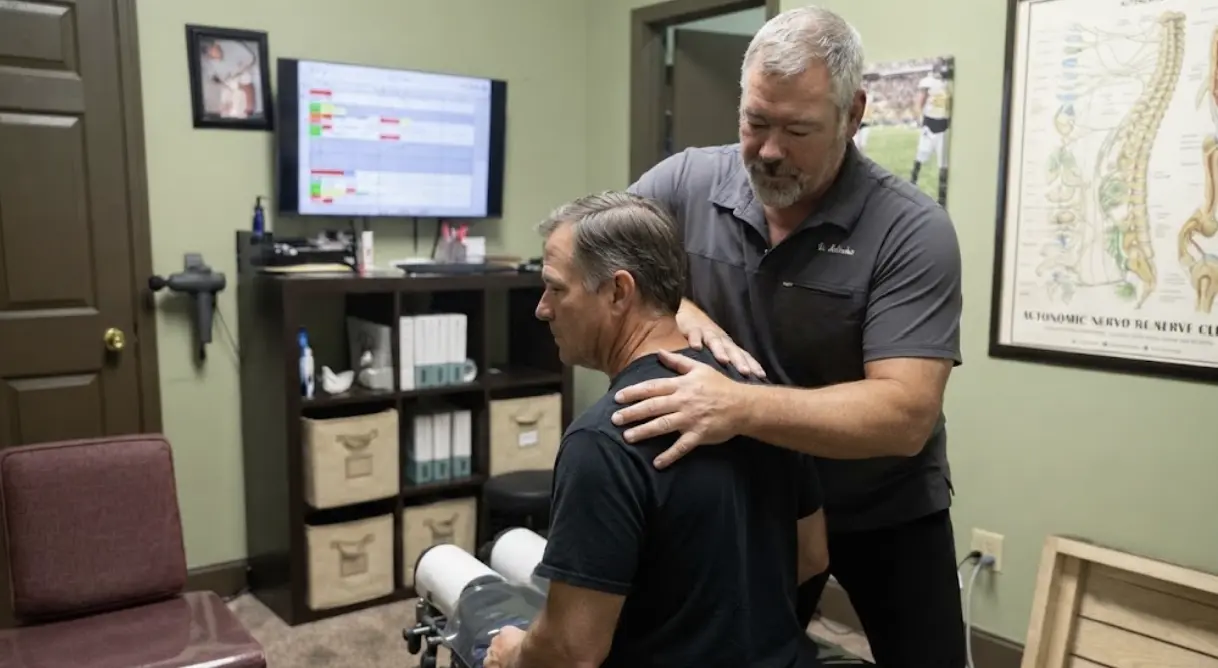
A chiropractic adjustment is not a generic “cracking” of the spine. It’s a specific, targeted intervention applied to a joint that has lost its normal range of motion, a condition chiropractors call a subluxation. The audible pop that sometimes occurs is just gas releasing from the joint capsule. The actual therapeutic effect comes from restoring normal joint movement, which reduces the mechanical stress on surrounding nerves and tissues.
That restoration matters because spinal joints communicate directly with the nervous system. When a joint is restricted, it sends altered sensory signals to the brain, which responds by tightening local muscles and amplifying pain perception in the area. Correcting the joint’s position and mobility interrupts that feedback loop at the source.
This is why a single adjustment can produce immediate relief that a week of stretching didn’t. The stretch was addressing the tight muscle. The adjustment addressed why the muscle was tight.
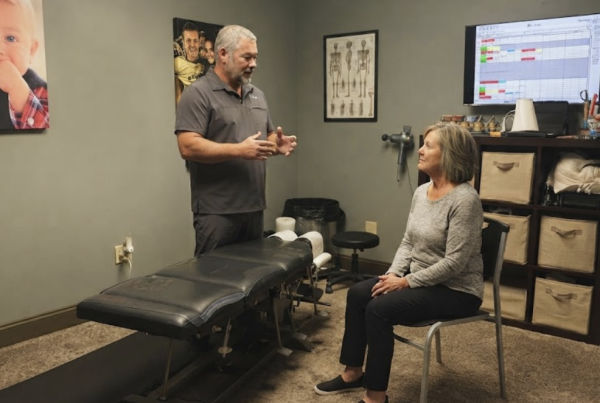
At McCracken Chiropractic, Dr. Chris McCracken evaluates each patient before any adjustment is performed, because the specific technique used matters as much as the decision to adjust at all. Not every joint needs the same approach, and not every patient presents the same way.
How Does Chiropractic Compare to the Real Alternatives?
Here’s where honest tradeoff analysis actually helps. Each major treatment path has a genuine role. The question is whether that role fits your specific situation.
| Treatment Option | What It Does Well | Where It Falls Short | Best Fit |
| Chiropractic adjustment | Restores joint movement, reduces nerve irritation, and addresses the root cause | Requires multiple visits for chronic conditions; not appropriate for fractures or certain pathologies | Spinal pain, nerve symptoms, post-accident injuries, recurring headaches |
| Pain medication (OTC/Rx) | Fast symptom relief, accessible | Doesn’t address the mechanical cause; risk of dependency with long-term use | Short-term management while pursuing real treatment |
| Physical therapy | Strengthens supporting muscles, improves movement patterns | Works best when joint mobility is already restored; less effective on restricted joints | Post-surgical rehab, long-term strength building |
| Surgery | Corrects severe structural damage | Irreversible, carries real risk, often preceded by years of conservative care that wasn’t tried first | Confirmed disc herniation with nerve damage, spinal instability, and unresponsive to conservative care |
| Waiting it out | Costs nothing upfront | Compensatory patterns develop; acute injuries become chronic; options narrow | Genuinely minor, self-resolving strains only |
The contrarian claim worth stating plainly: surgery is often the last resort, not because it’s the most effective, but because it’s the most irreversible. Patients who reach a surgical consult having never tried consistent chiropractic care are not uncommon. They’re common. And many of them, after surgery, still need the conservative care they skipped.
Physical therapy and chiropractic care aren’t opposites. They work on different parts of the same problem. A joint that won’t move properly can’t be strengthened to function correctly. Adjustments restore the mobility; corrective exercises build the stability around it. That sequence is exactly why McCracken Chiropractic’s approach includes both.
What About Auto Accident Injuries? Doesn’t That Change the Equation?
Yes. Significantly.
After a car accident, the injury pattern is different from chronic pain that develops gradually. Whiplash, for example, involves rapid hyperextension and flexion of the cervical spine that strain ligaments, compress joints, and irritate nerve roots, often without producing any visible findings on a standard X-ray. The absence of imaging findings doesn’t mean the absence of injury. It means the injury is soft-tissue and joint-based, which is exactly what chiropractic care is designed to treat.
The window after an accident matters. Inflammation peaks within the first 72 hours, but the structural compensation patterns that can turn an acute injury into a chronic problem develop over the following weeks. Getting evaluated early, before those patterns set in, is the difference between a recovery that takes weeks and one that takes years.
Consider a common scenario: someone rear-ended at a stoplight feels stiff the next morning but assumes it’ll pass. Two weeks later, the neck pain is worse, not better, and now there are headaches. By the time they seek care, the original joint injury has been compounded by weeks of guarded movement and muscle splinting. The treatment plan is now longer and more involved than it would have been at day three.
McCracken Chiropractic’s auto accident injury treatment is designed specifically for this presentation, including documentation support that matters if an insurance claim is involved.
If you’ve been in an accident and you’re waiting to see if the pain goes away on its own, that’s the most expensive decision you’re making right now.
Schedule an evaluation at McCracken Chiropractic before that window closes.
The Decision Framework: When Chiropractic Is the Right First Call
The Mechanical-First Decision Framework is a simple filter for deciding whether chiropractic care should be your starting point or a supporting treatment.
Use chiropractic as your first call when:
- The pain is in your spine, neck, or radiates into your arms or legs
- The pain started after an injury, accident, or specific physical event
- You’ve had recurring pain in the same area that temporarily responds to medication, but returns
- You’re experiencing headaches that start at the base of the skull
- You want to avoid medication dependency or are already concerned about it
Consider chiropractic as part of a broader plan when:
- You’re post-surgical and rebuilding function
- You have a confirmed diagnosis requiring specialist management alongside conservative care
Chiropractic care is not the right starting point when there’s a suspected fracture, active infection, certain vascular conditions, or spinal instability that requires surgical stabilization. A proper evaluation rules those out before any adjustment is performed. That’s not a disclaimer. That’s what a thorough intake process looks like.
The conditions treated at McCracken Chiropractic include back pain, neck pain, sciatica, headaches, and post-accident injuries, and every treatment plan starts with understanding what’s actually driving the problem.
What Should You Realistically Expect?
Honest timelines matter here. Chiropractic care isn’t a one-visit fix for most conditions, and any provider who suggests otherwise is selling you something.
For acute injuries (recent onset, first episode), most patients notice meaningful improvement within three to six visits. For chronic conditions that have been present for months or years, the timeline is longer, typically because the compensatory patterns that developed around the original problem need to be addressed alongside it.
The mechanism of progress is cumulative. Each adjustment builds on the last because the nervous system is learning a new normal. Joints that have been restricted for months don’t reset in a single session. The goal of early visits is to restore mobility and reduce acute inflammation. The goal of later visits is to reinforce the corrected position and address the surrounding tissue dysfunction.
Spinal decompression therapy and laser therapy can accelerate this process for specific presentations, particularly disc-related pain and soft-tissue injuries where inflammation is a primary driver.
What you won’t get at McCracken Chiropractic is a one-size treatment plan. The personalized approach isn’t marketing language. It’s the reason outcomes differ between providers who are technically performing the same adjustment.
The thing that separates a forgettable visit from one that changes your trajectory is whether the provider treats your spine or treats you.
Frequently Asked Questions
Is a chiropractic adjustment safe, or is there a real risk of making things worse?
For the vast majority of musculoskeletal conditions, chiropractic adjustments are safe when performed after a proper evaluation. The evaluation step is what makes them safe. Serious adverse events are rare and are almost always associated with pre-existing conditions that a thorough intake process would identify. Skipping the evaluation is where risk enters the picture, not the adjustment itself.
How do I know if my pain is the kind chiropractic can actually fix?
If your pain is in your spine, neck, or radiates into your limbs, and it started after an injury or has been recurring in the same location, chiropractic care is a strong fit. Pain that’s accompanied by fever, unexplained weight loss, or follows a recent trauma with suspected fracture needs imaging first. A qualified chiropractor will tell you if your situation calls for a different starting point.
Will I need to keep coming back forever?
Not necessarily, and no honest provider will tell you that you do. Acute injuries typically resolve with a defined course of care. Some people with chronic conditions choose to continue with maintenance visits because they find it prevents recurrence, but that’s a choice, not a requirement. The goal of good chiropractic care is to get you to a point where you need it less, not more.
What’s the difference between seeing a chiropractor and just going to physical therapy?
Physical therapy focuses primarily on strengthening and movement retraining. Chiropractic care focuses on restoring joint mobility and reducing nerve irritation. For many conditions, both are useful at different stages. A joint that can’t move properly won’t respond well to strengthening exercises. Adjustments restore the mobility; therapeutic exercises reinforce it. They address different parts of the same problem.
I was in a car accident, but I don’t feel that bad. Do I still need to be seen?
Yes, and the timing matters. Soft-tissue and joint injuries from car accidents often feel minor in the first 24 to 48 hours because inflammation builds over time. The structural compensation patterns that turn an acute injury into a chronic problem develop in the weeks after the accident, not immediately. Getting evaluated early, before those patterns set in, is what keeps a manageable injury from becoming a long-term problem.
Does chiropractic care work for headaches, or is that just a marketing claim?
Cervicogenic headaches, meaning headaches that originate from tension and joint restriction in the cervical spine, respond well to chiropractic care. The mechanism is direct: restricted joints in the upper neck refer pain into the base of the skull and across the head. Restoring normal movement in those joints removes the source of the referral. Not all headaches are cervicogenic, so a proper evaluation determines whether chiropractic is the right approach for your specific presentation.
How do I know if McCracken Chiropractic is the right fit for my situation?
The best way is to come in for an evaluation. Dr. Chris McCracken takes a whole-person approach, meaning the intake process is designed to understand what’s actually driving your problem before any treatment begins. If your situation calls for a different type of care or a referral, you’ll be told that directly. You can review patient testimonials to get a sense of how the practice operates, or complete a new-patient health history form before your first visit to make the most of your time.
If you’re in the Calhoun, GA area and you’ve been managing pain by managing around it, the evaluation is the right next step. Not a commitment to a long treatment plan. Just a clear picture of what’s actually going on and what it would take to fix it.
Request an appointment at McCracken Chiropractic at 1012 South Wall Street, Calhoun, GA. Same-week availability is typically possible, and the intake process is straightforward via the website’s online forms.
About the Author
McCracken Chiropractic is a family-oriented chiropractic practice in Calhoun, GA, specializing in non-surgical, drug-free treatment for pain, injury, and preventative wellness. Led by Dr. Chris McCracken, the practice serves auto accident injury victims, chronic pain patients, and health-conscious families through personalized treatment programs that address the whole person, not just the presenting symptom.